FlowForm / Spatula

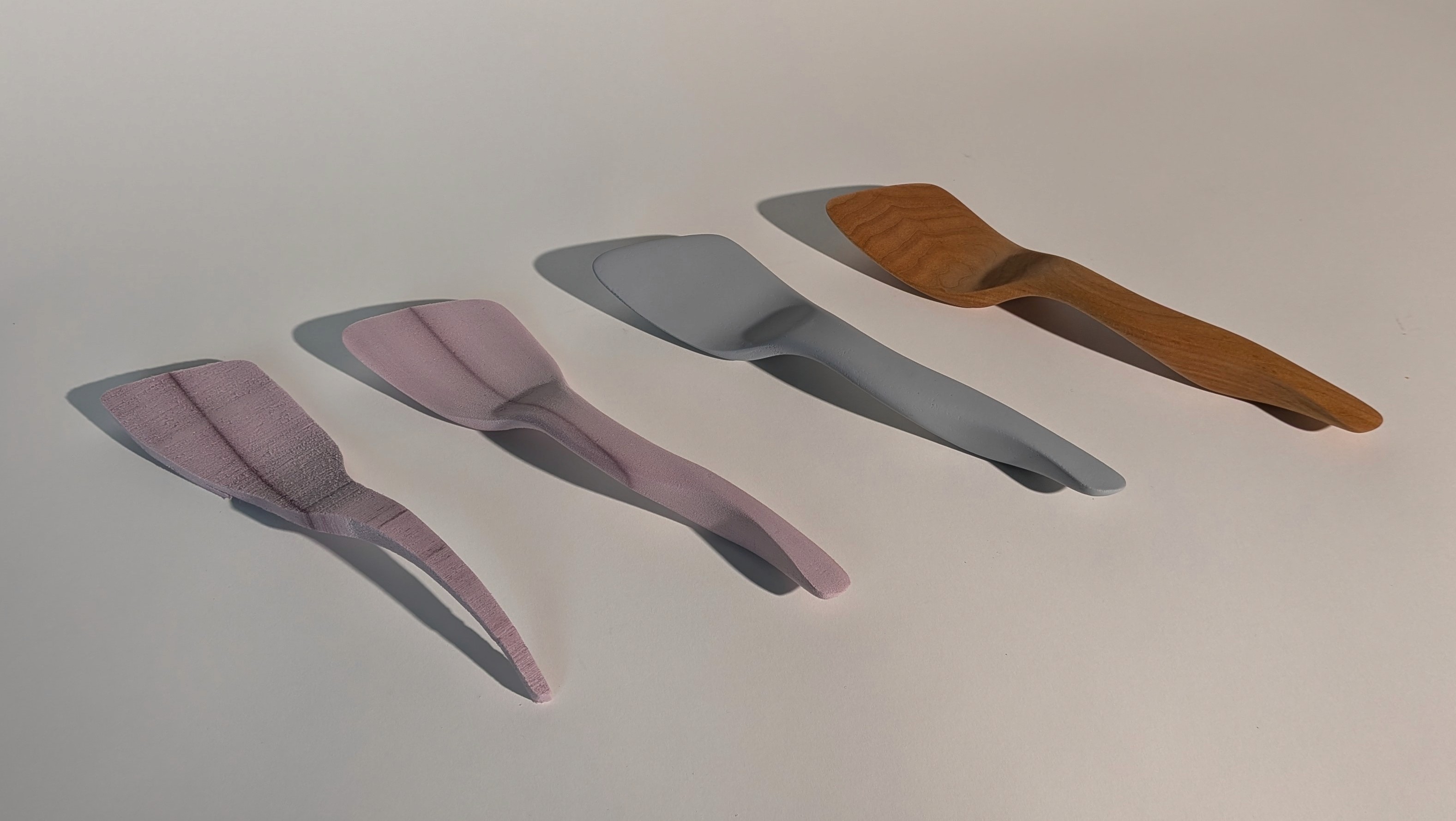
A hand-sculpted wood spatula that explores ergonomic interaction and expressive form through curvilinear transitions and guided fabrication techniques.

00
problem

How can a single block of wood be transformed into a functional, ergonomic tool through the disciplined study of curvilinear form, surface transitions, and hand-tool interaction? This project challenged me to synthesize observational research, sculptural intuition, and precision fabrication to create a spatula that communicates use through form alone.

solution

Rather than treating the spatula as a static utensil, I chose to spin this project as a kinetic extension of the body, designed with the intention of amplifying natural motion rather than interrupting it. By grounding the design in the anatomical mechanics of the forearm, the form becomes a conduit for energy transfer, enabling more fluid, intuitive control in everyday tasks.

The final spatula was sculpted as a seamless extension of the human forearm, with each curve formed to imitate the rotational dynamics of the ulna and radius. By distributing material to support agility, grip, and directional control, the form balances aesthetic elegance with biomechanical precision. This enables intuitive, full-body engagement in scraping, lifting, and flipping tasks.
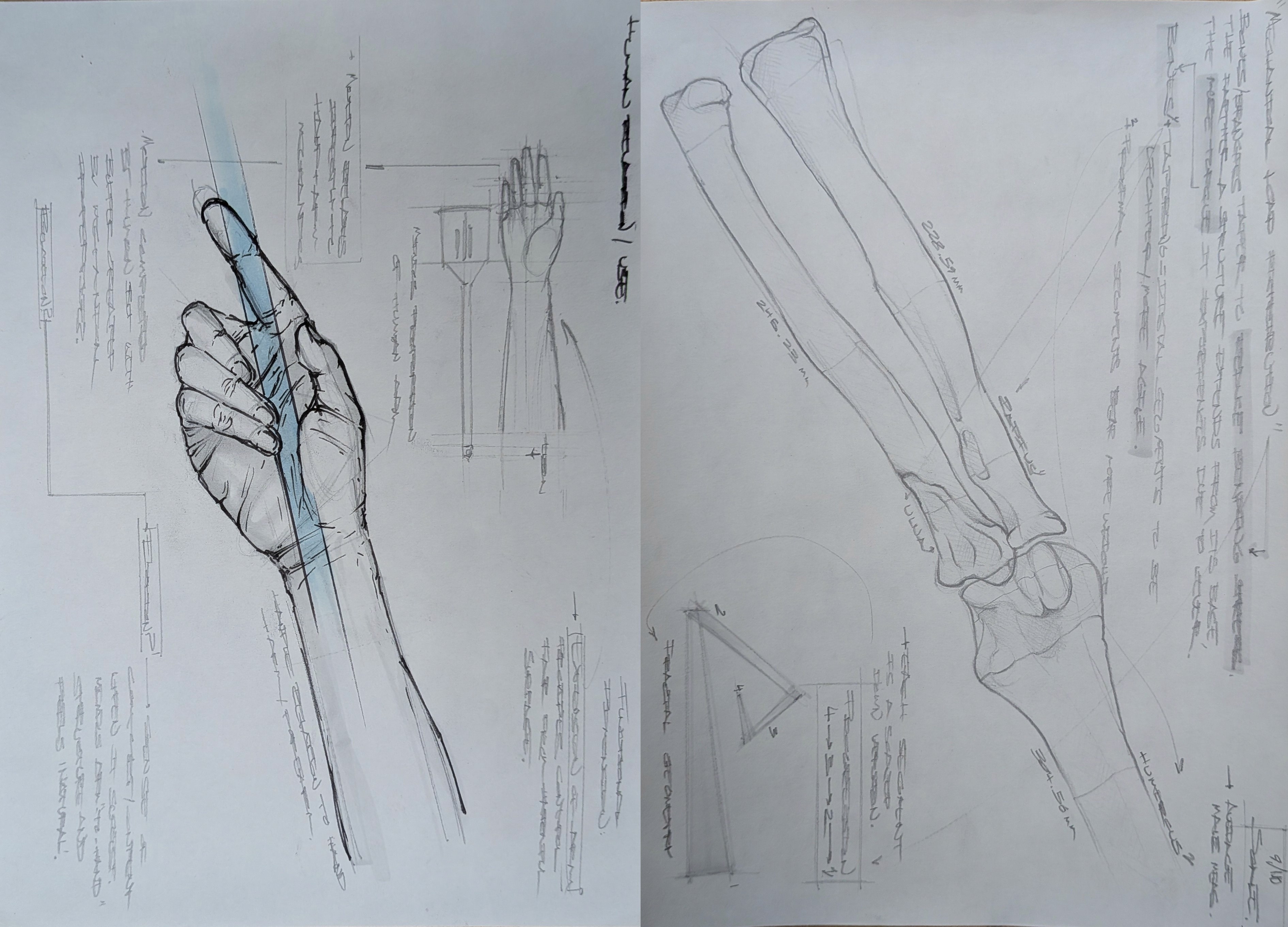
This project started with a block of wood and a deceptively open-ended prompt: make a spatula that works, feels good in the hand, and communicates its purpose through form alone. From the beginning, I knew I didn’t want to just carve out a generic kitchen tool. My inspiration was instantly identified when I came across the theory of 'mechanomorphism' or the tendency of humans to see machine-like behavior in other humans. Since the spatula is in it's simplest form a tool, I wanted to treat it like an extension of the body, something that could move with the arm, not just sit in the hand. That meant diving into the anatomy of the forearm, studying how the ulna and radius rotate, and figuring out how to translate that motion into curves and surfaces that actually support it.

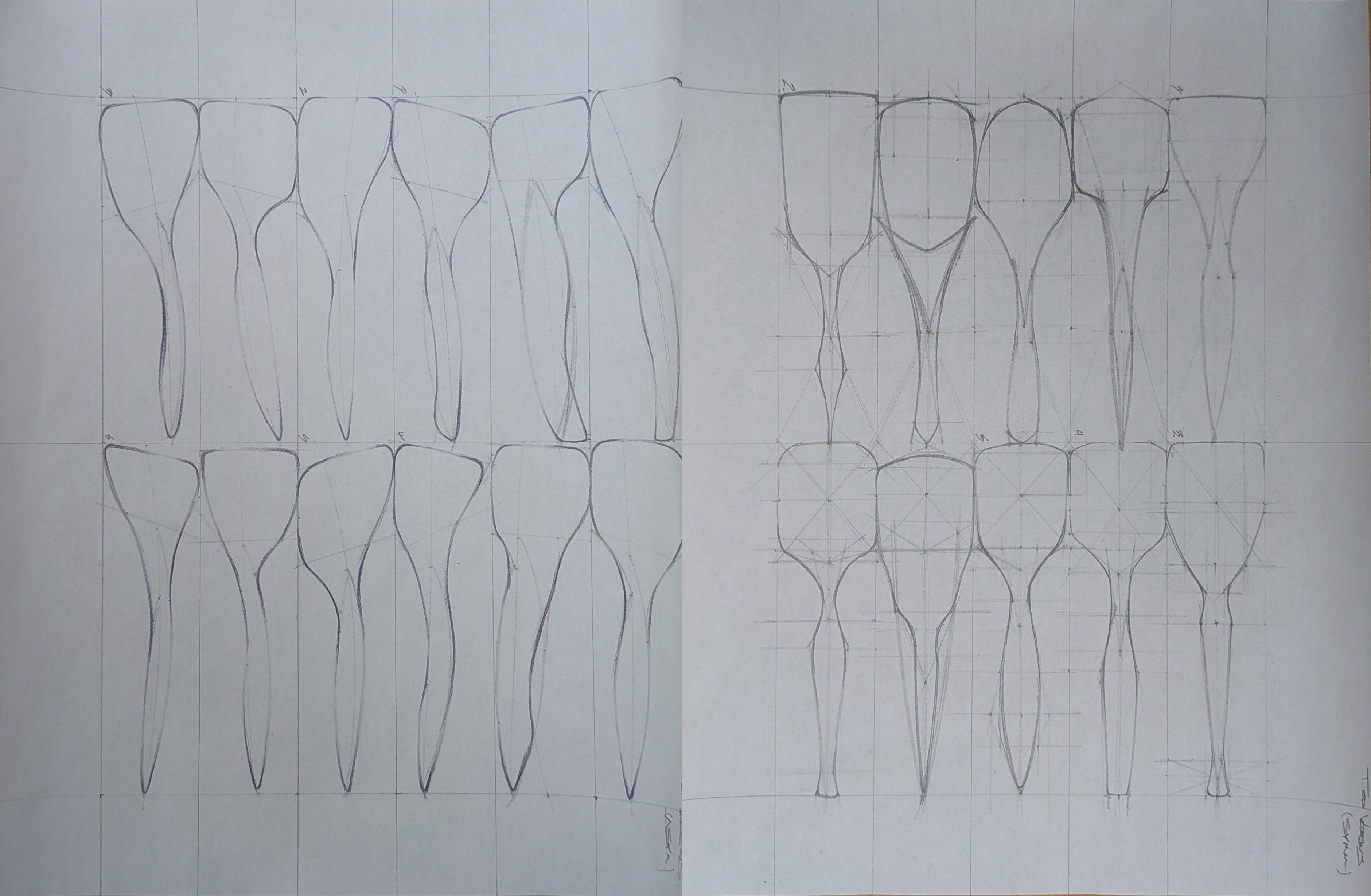
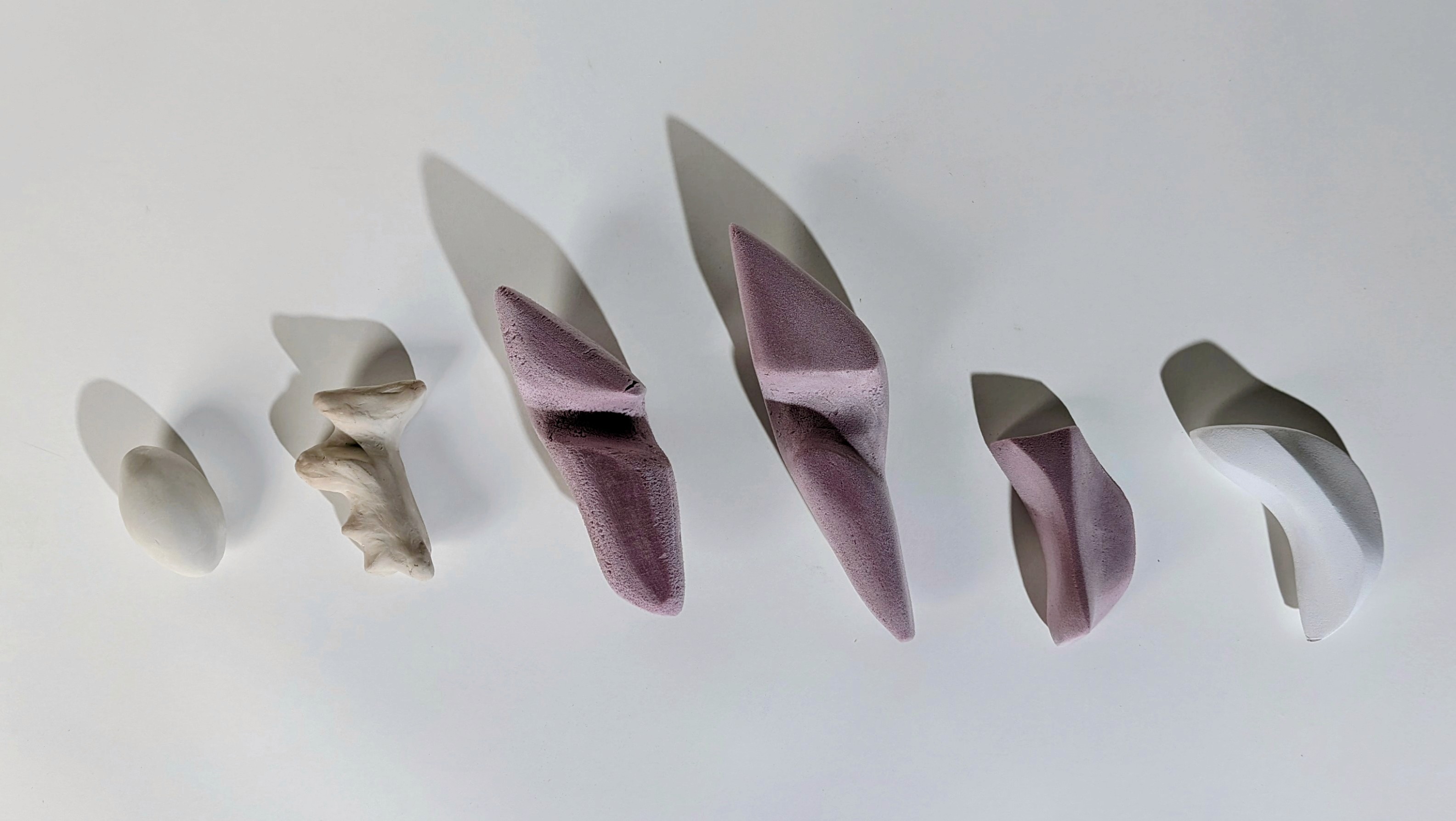
I spent a lot of time sketching, modeling in foam, and mapping out how the hand interacts with tools, not just where it grips, but how it shifts, rotates, and applies pressure. Every curve in the final form was placed with intention, balancing aesthetics with physical logic. I used orthographic drawings to lock in the geometry, and the foam models helped me test proportions and transitions before committing to wood. The goal was to make something that felt like it belonged in motion, agile, responsive, and precise.

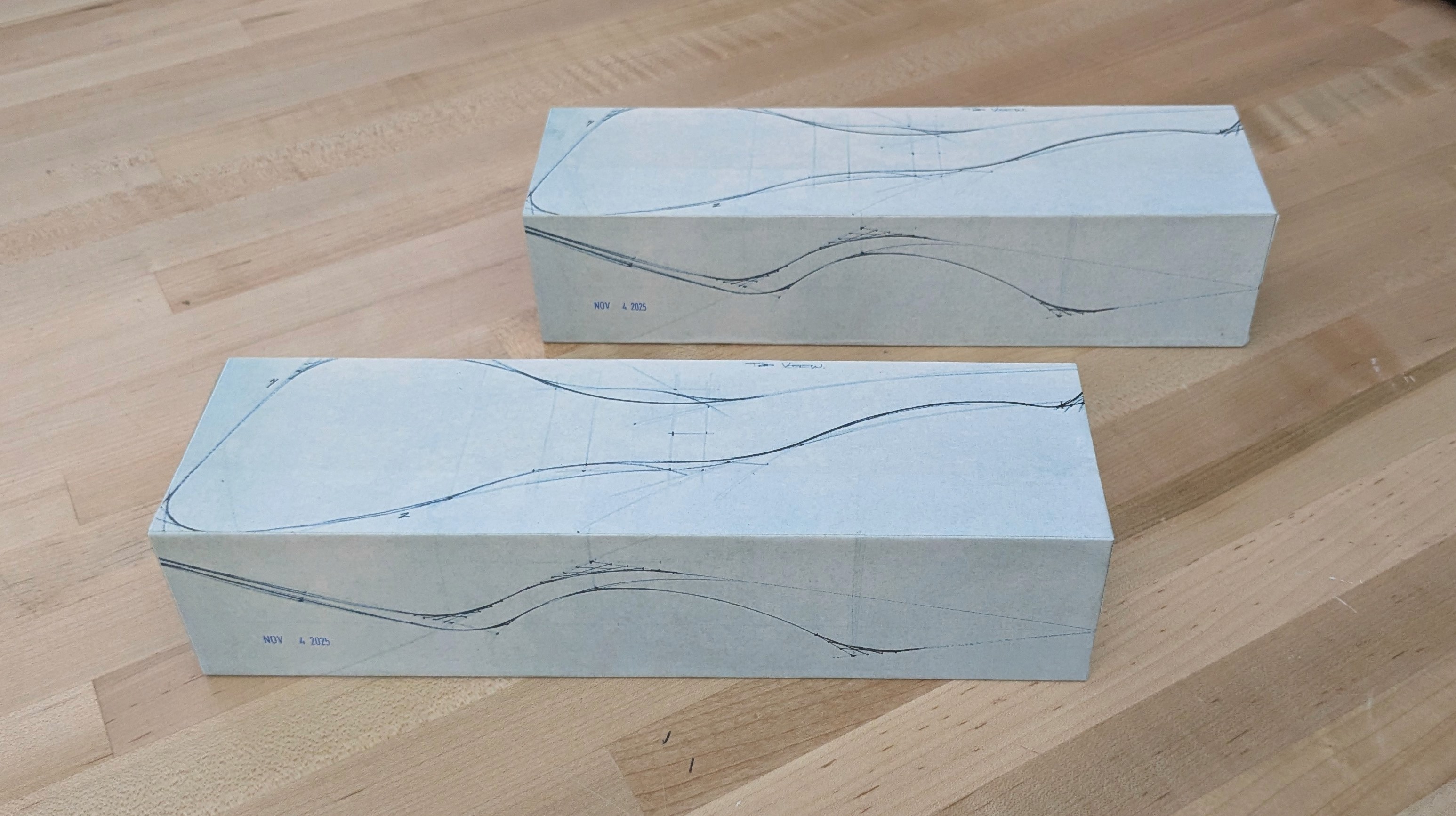
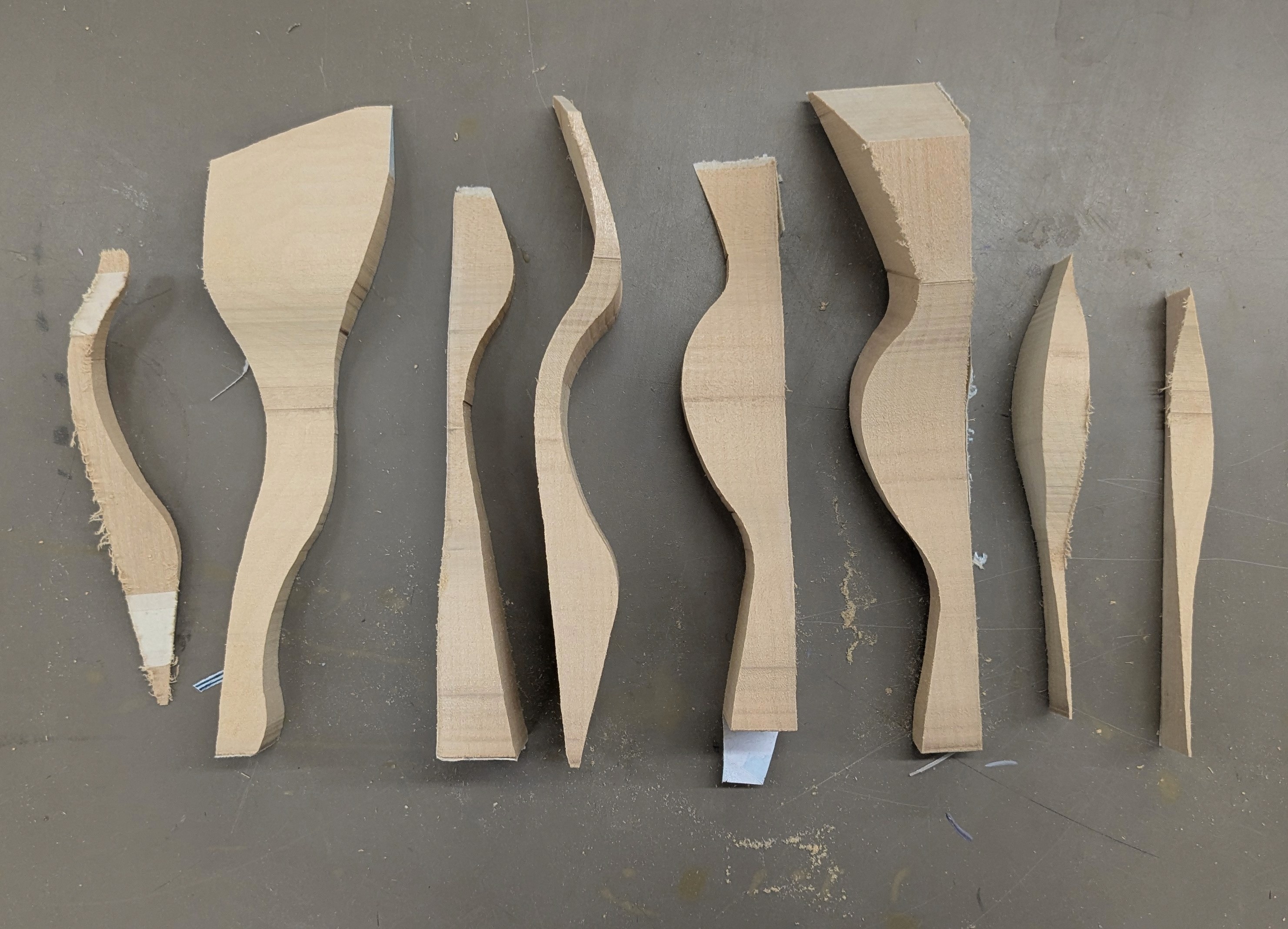
The fabrication process was its own kind of challenge. We were only allowed four bandsaw cuts, and half of the resulting edges had to stay sharp and untouched. That forced me to be really deliberate about where I removed material and how I shaped the rest. I used sanding not just to smooth things out but to sculpt subtle transitions that guide the hand and direct movement. It was a slow, iterative process with a lot of back and forth between the tool and my own body, checking how it felt, how it moved, and whether it was doing what I needed it to do.

In the end, the spatula became more than just a tool. It became a study in how form can carry meaning and motion. It’s not flashy, but it achieved my goal of using design thinking and the idea of nature replicating mechanical movements to calculate a form. Every surface is doing something, whether it’s catching the palm, guiding the thumb, or shifting weight for better control. It’s a small object, but it taught me a lot about how to design with anatomy, movement, and material in mind, and how much clarity you can get from working within tight constraints.

year

2025

year

2025

year

2025

year

2025

timeframe

3 weeks

timeframe

3 weeks

timeframe

3 weeks

timeframe

3 weeks

tools

Orthographic drawing, foam modeling, bandsaw, disc sander, belt sander, spindle sander, 180-grit sandpaper, hand sanding, ergonomic diagramming, image compositing

tools

Orthographic drawing, foam modeling, bandsaw, disc sander, belt sander, spindle sander, 180-grit sandpaper, hand sanding, ergonomic diagramming, image compositing

tools

Orthographic drawing, foam modeling, bandsaw, disc sander, belt sander, spindle sander, 180-grit sandpaper, hand sanding, ergonomic diagramming, image compositing

tools

Orthographic drawing, foam modeling, bandsaw, disc sander, belt sander, spindle sander, 180-grit sandpaper, hand sanding, ergonomic diagramming, image compositing

category

Studio Sprint

category

Studio Sprint

category

Studio Sprint

category

Studio Sprint

01

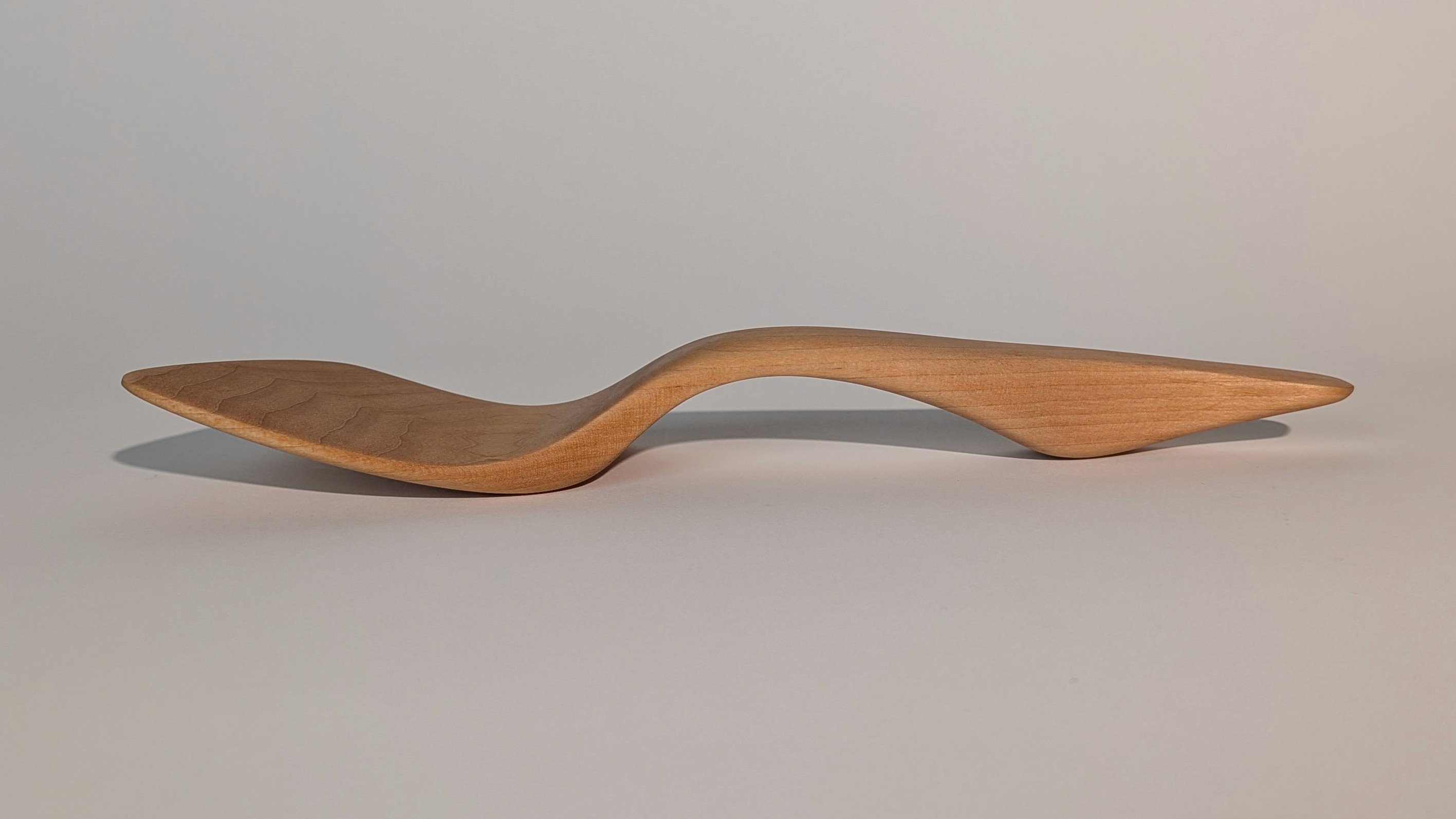
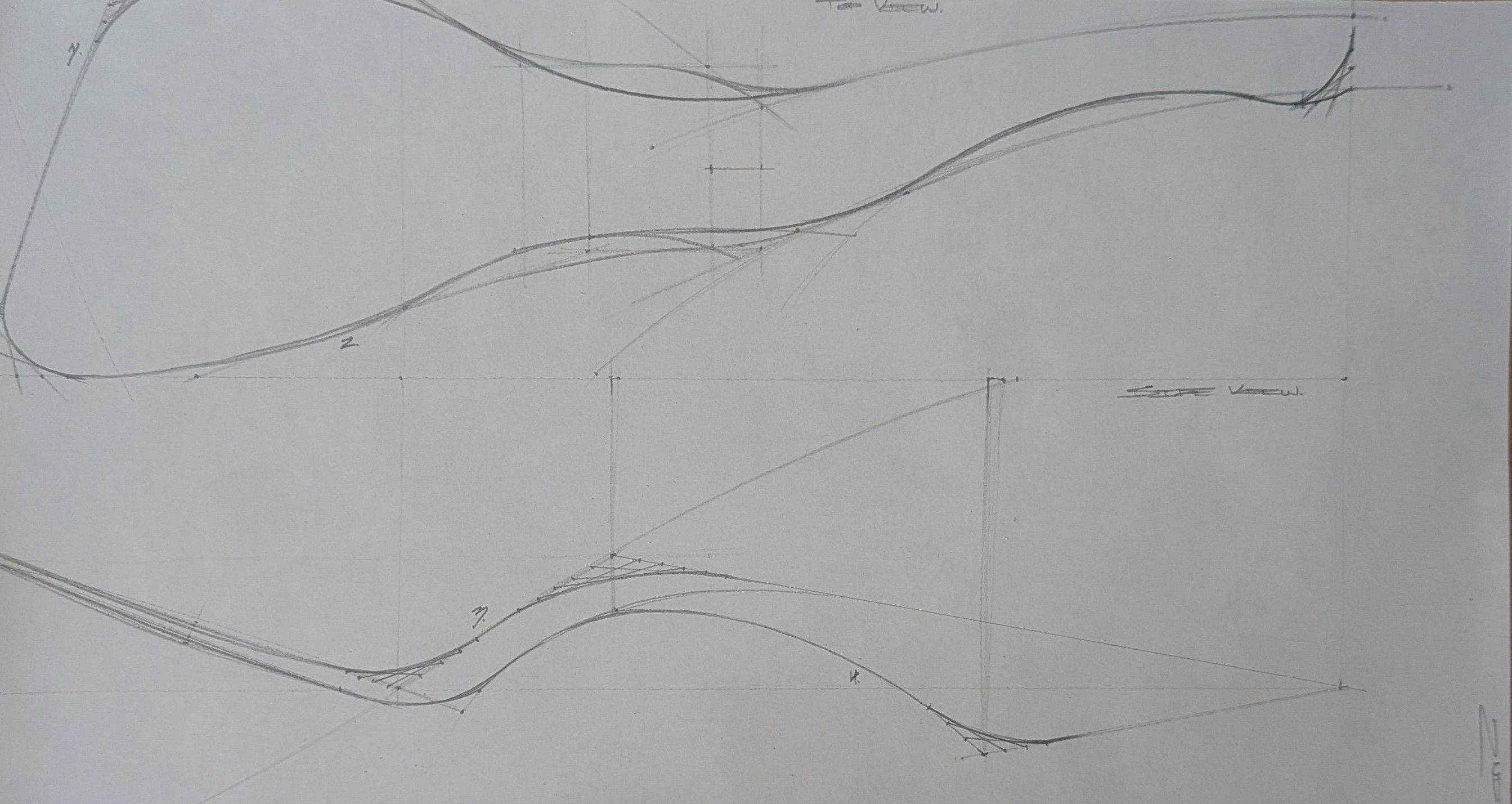
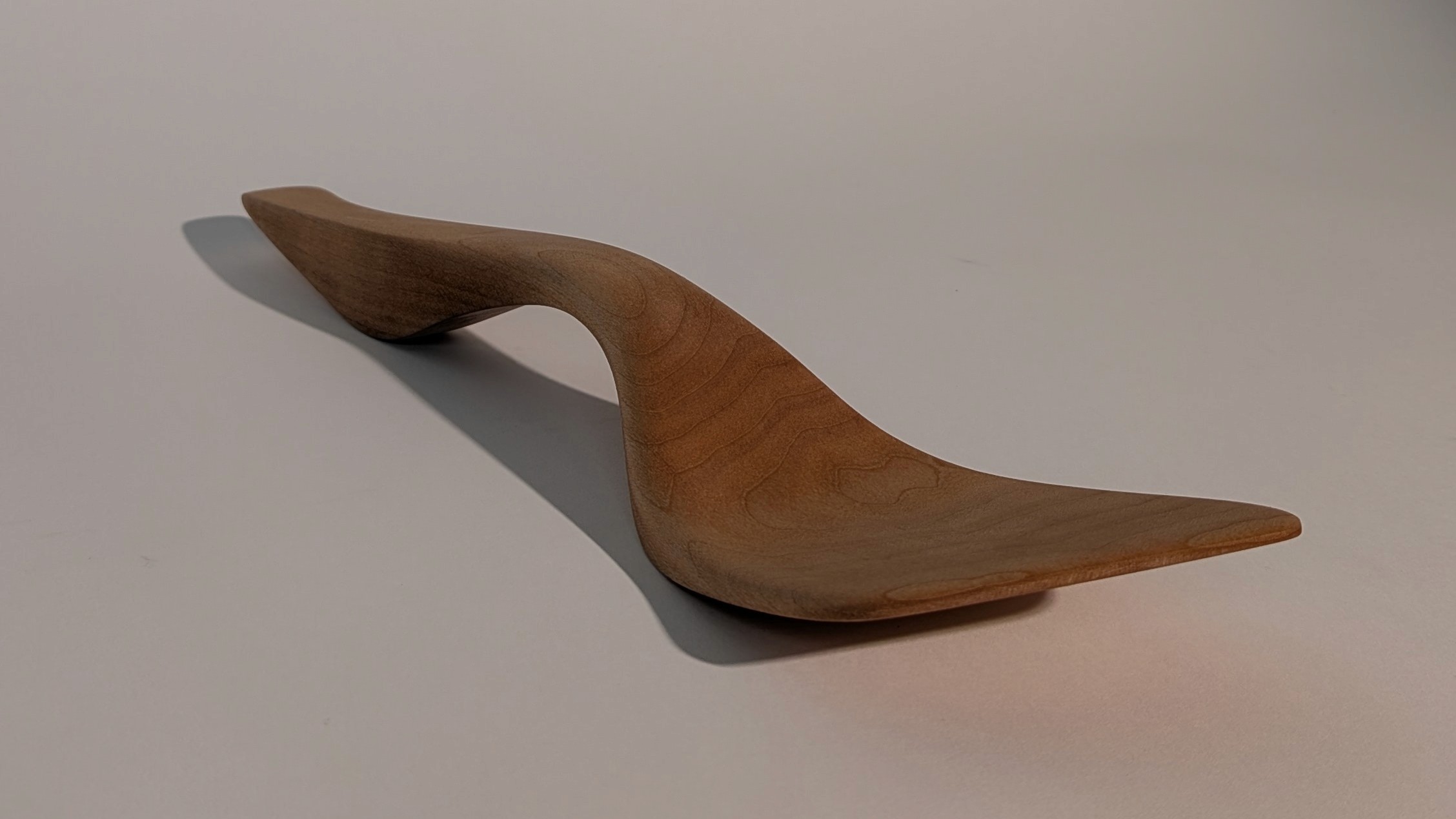
Designing a flowform meant every curve had to be chosen with intentionality. From a side view, I aimed to follow a dynamic curve system that gave the spatula a agile feel without compromising strength or durability.

02

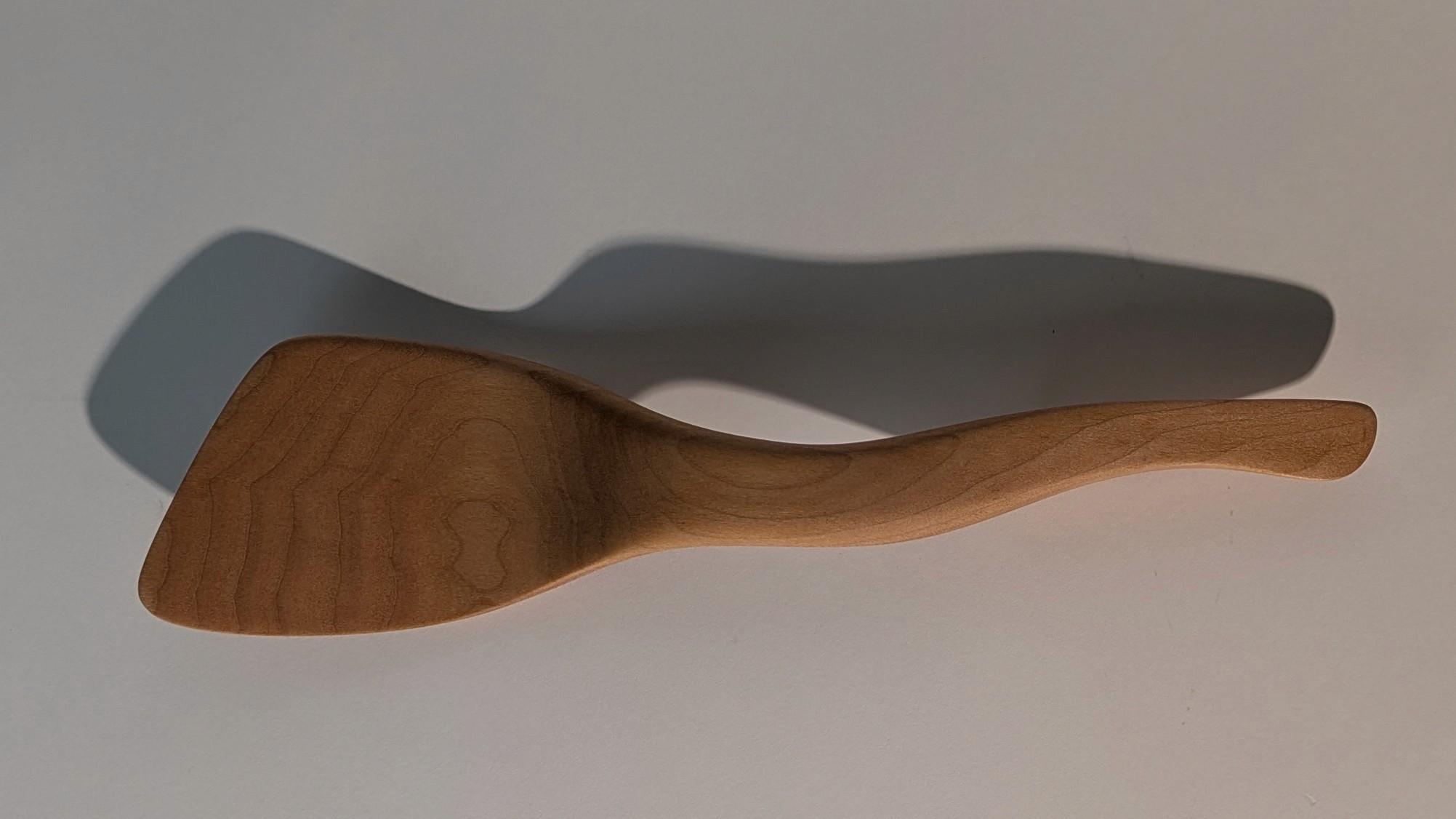
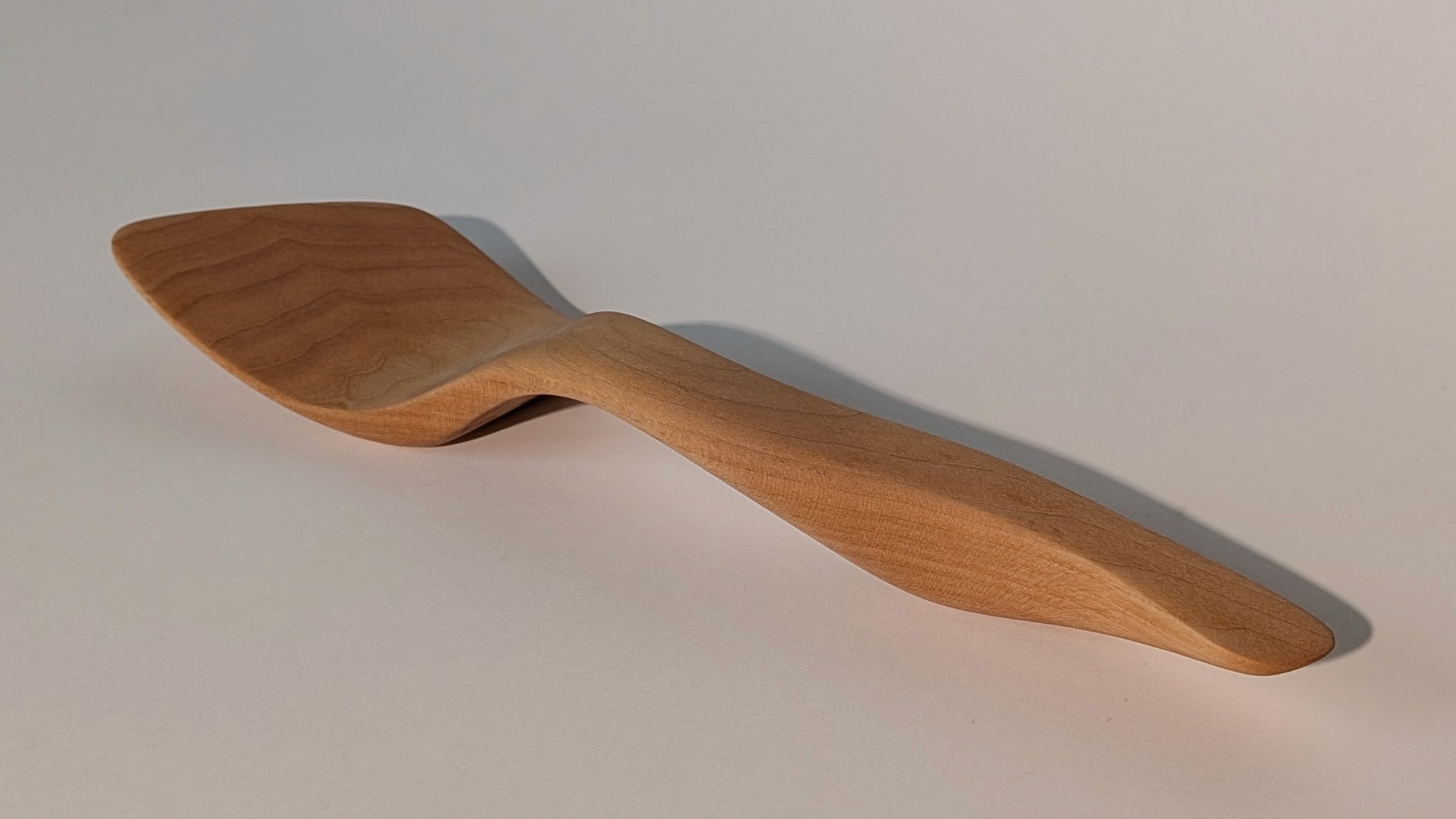
From a top view, the influence of my skeletal studies shows through the most. The handle portion was shaped mainly considering a right handed grip, where points of pressure determine the gradual width increase.

03

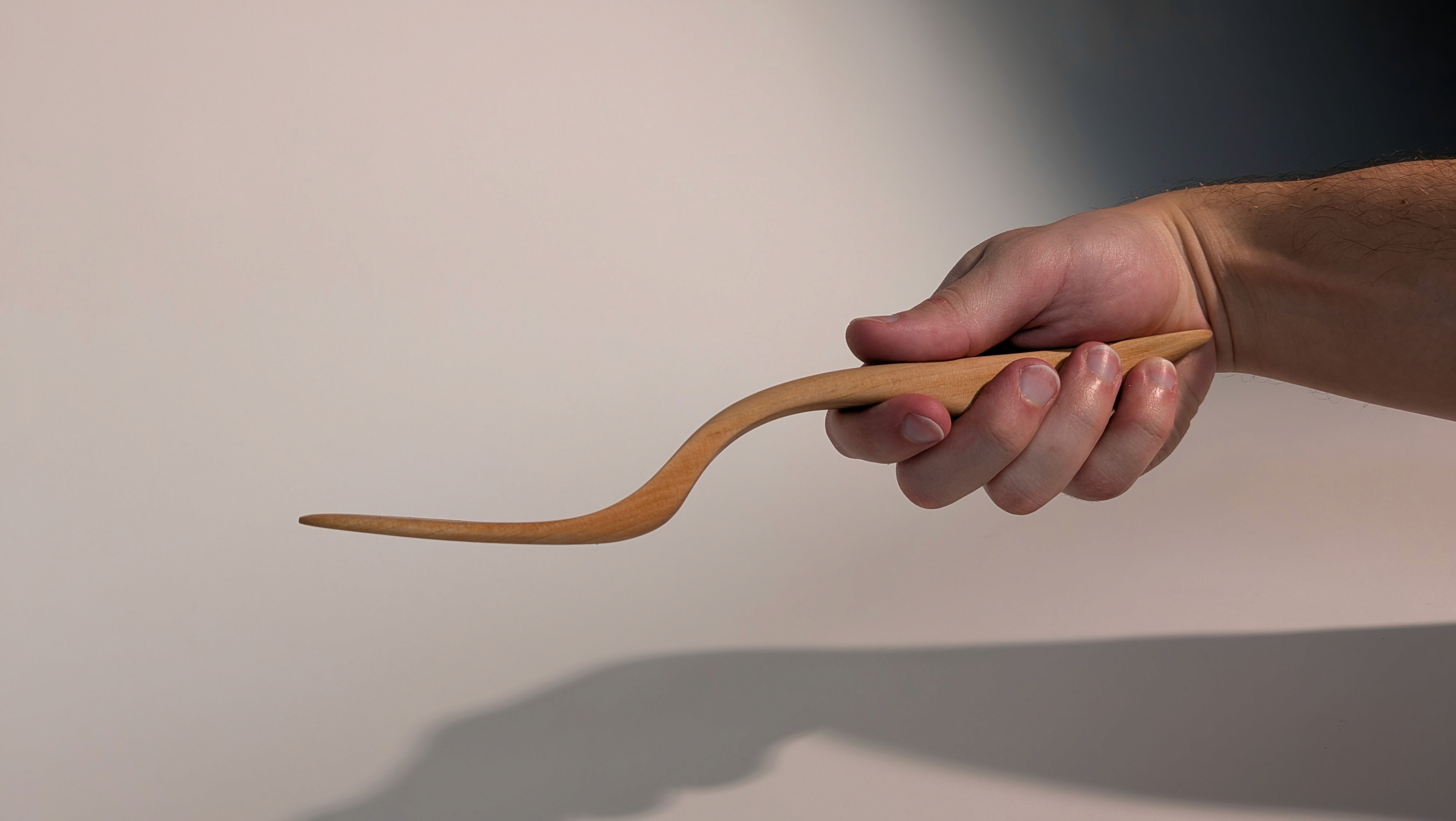
The handle of this flowform is really its magic; from a strict side profile it apears to be a simple elongated "S" curve. Mass is added at each curves change of direction for a weight distribution that feels natural. Combined with the top orthographic design, this creates a handle that allows the hand to grasp with maximum control, and minimum force required.

04

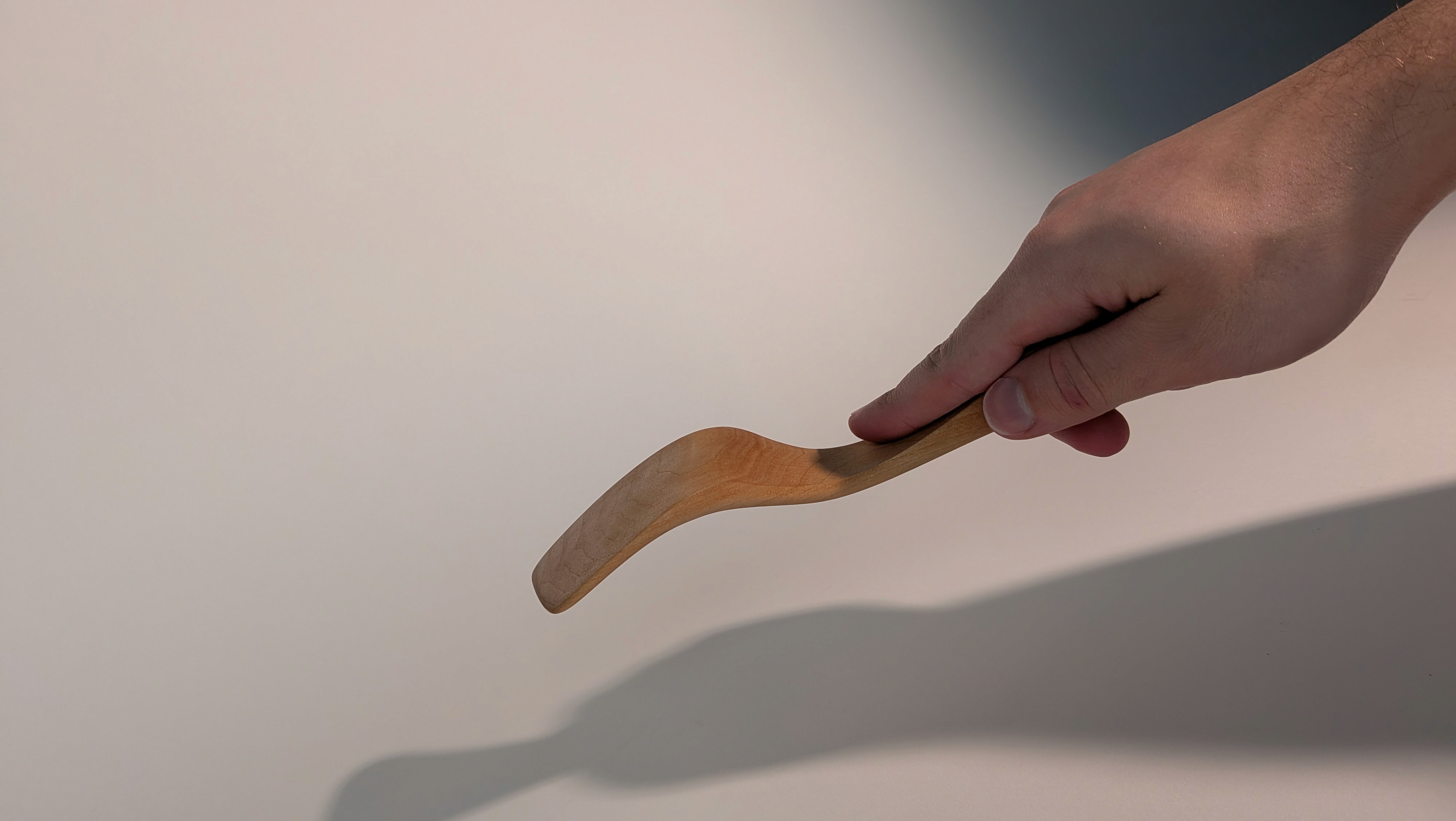
The spatula's dimensions and bottom side curvature also allow for a 'scraping' motion to be performed by the user while maintaining the same agility and comfortable grip. The pointer finger implements guiding force closer to the blade.

05

The overall form of the spatula was developed mainly through a combination of orthographic sketches, but small changes still occured to surface qualities and dimension through varied foam models.

06

Sketched orthographics placed onto the wood and foam blocks for bandsaw cutting

07

Result of bandsaw cuts following orthographic sketches

08

Anatomical Studies
Anatomical Studies
Anatomical Studies
Anatomical Studies

09

Early Top Orthographic skteches

010

Final Orthographic sketches

.say hello

i'm open for freelance projects, feel free to email me to see how can we collaborate

.say hello

i'm open for freelance projects, feel free to email me to see how can we collaborate

.say hello

i'm open for freelance projects, feel free to email me to see how can we collaborate

.say hello

i'm open for freelance projects, feel free to email me to see how can we collaborate