2026
·
Studio Sprint
·
Furniture

This project required translating the visual identity of a selected nationality into a rigorously constrained, rotation‑driven tripod table composed of five interlocking components. A CNC‑cut plywood top, two neon‑orange 3D‑printed connectors, a lathe‑turned spindle derived from Illustrator templates, and three legs shaped from a single plank using the Shaper Origin each imposed distinct limits on geometry, material behavior, and assembly. With no metal fasteners permitted and every part dependent on precise axial symmetry, the design demanded careful coordination between cultural reference, rotational form, and the realities of contemporary fabrication tools.

01 — Concept & Form Development
The project began with a strict brief: design a tripod table that expresses a chosen nationality through rotational symmetry and a five-part construction system. I chose Germany, drawing from the sturdy proportions, restrained ornamentation, and botanical structure of German furniture and Black Forest woodwork.
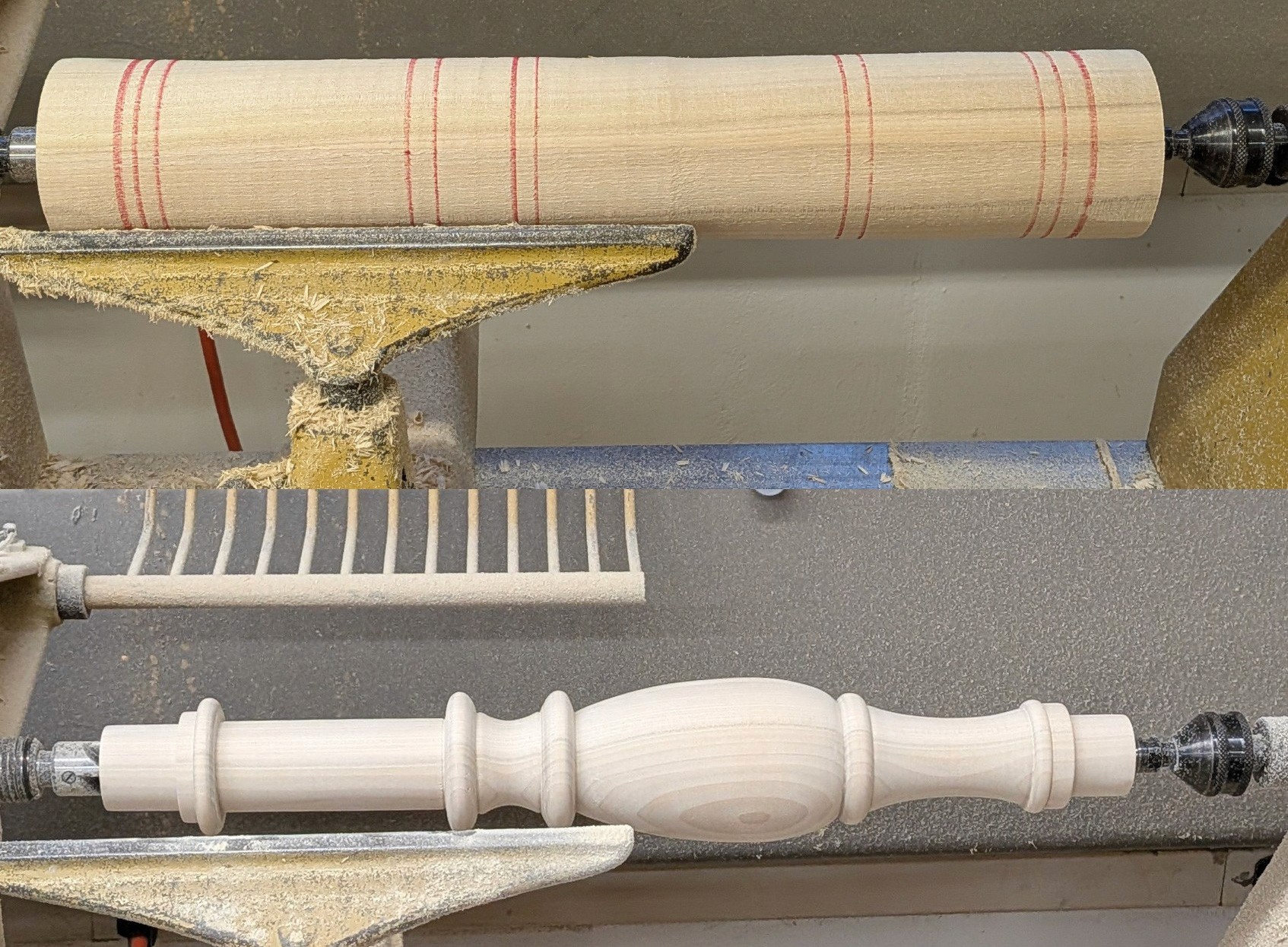
Rather than applying cultural motifs as decoration, I used proportion, curvature, and repeated geometry to carry the identity. The turned spindle became the central element, developed from botanical silhouettes and refined on the lathe into a calm, continuous profile.
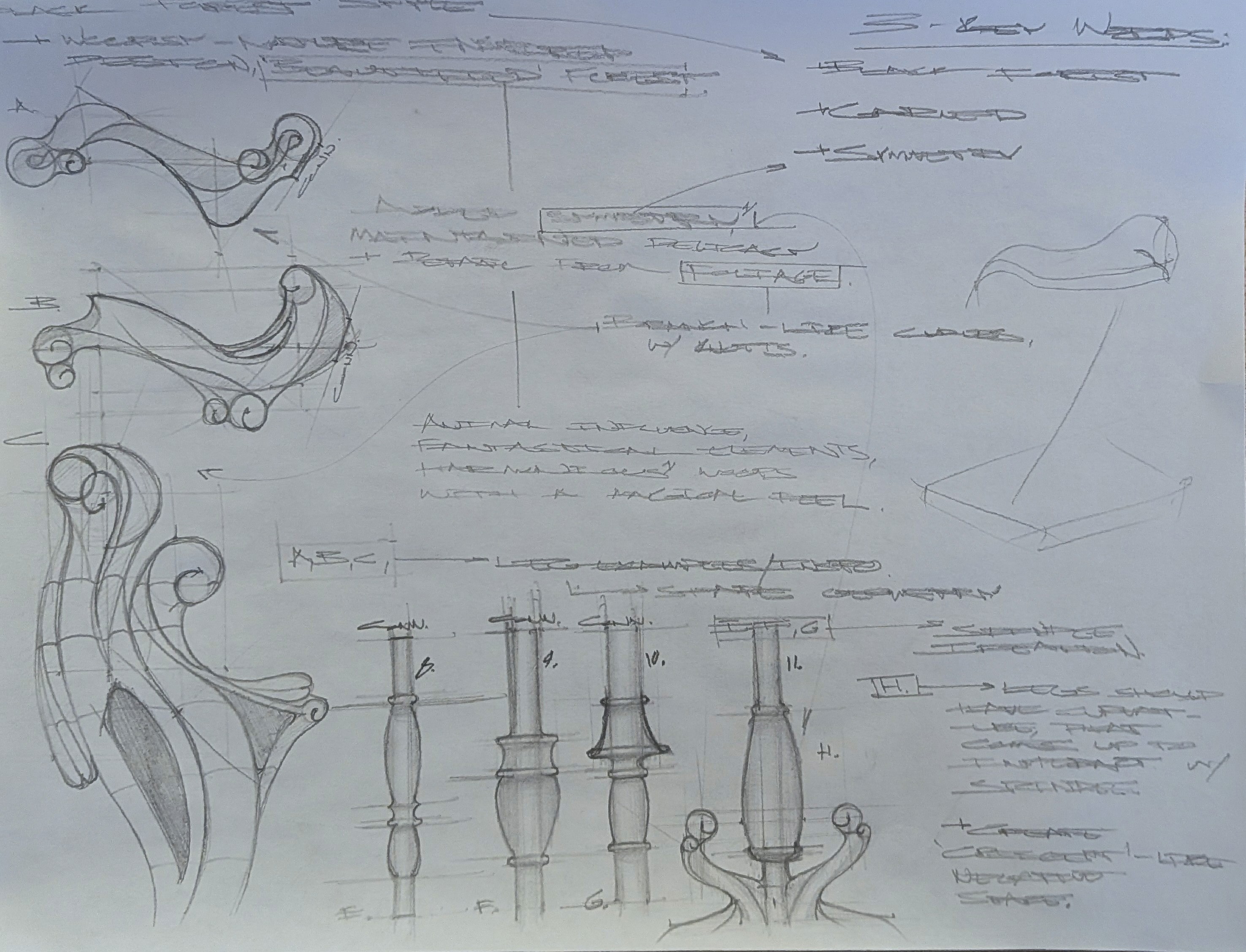
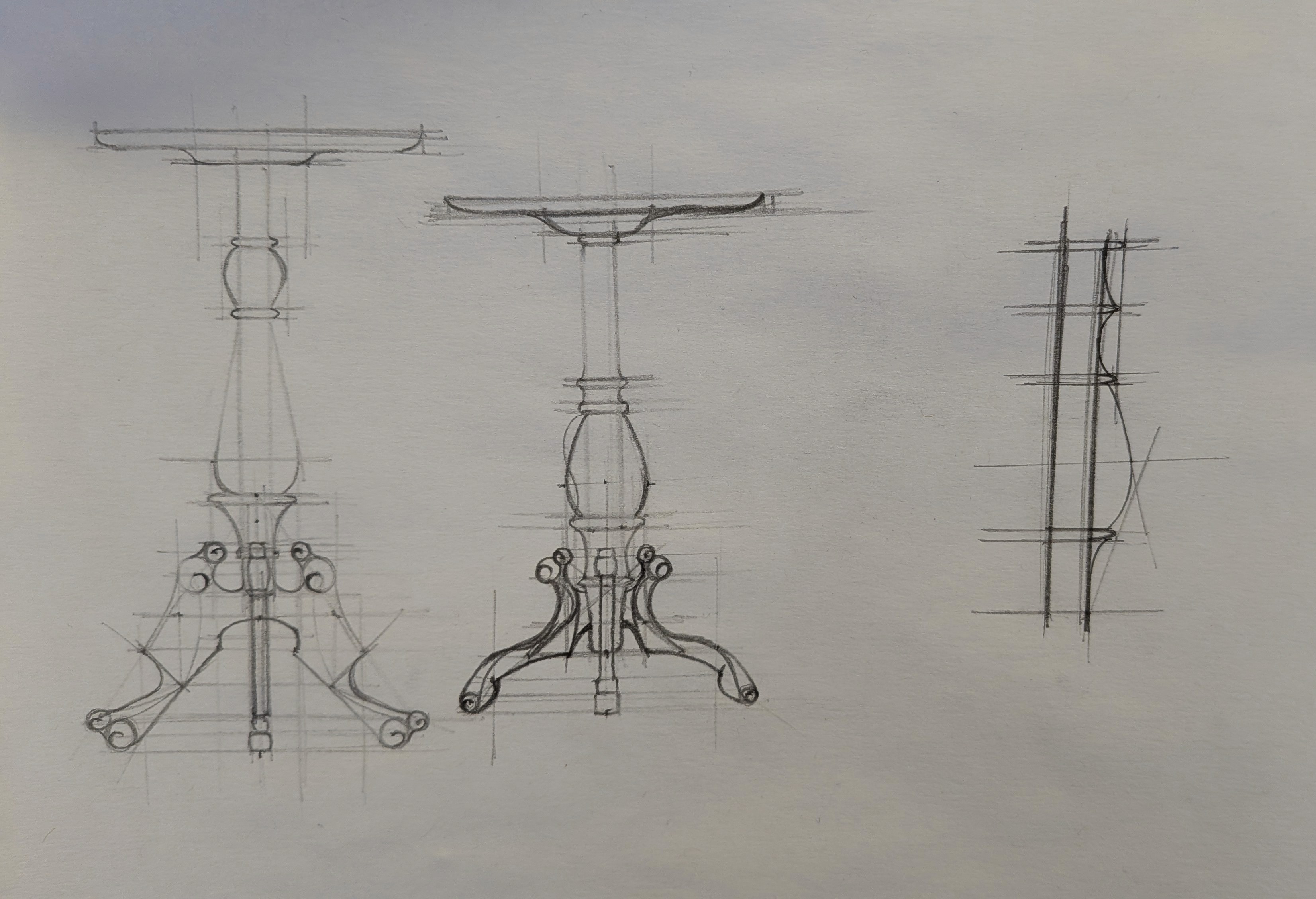
Three inward-tapered legs, cut from a single plank with the Shaper Origin, extend that same rotational language while giving the table a grounded stance.

02 — Construction, Detail & Finish
The connectors balanced function with visual restraint. A simple upper connector transitions cleanly from spindle to tabletop, while a concealed dowel system inside the lower 3D-printed connector locks the three legs in place without metal fasteners. The required neon-orange filament became a deliberate contemporary accent rather than something to conceal.
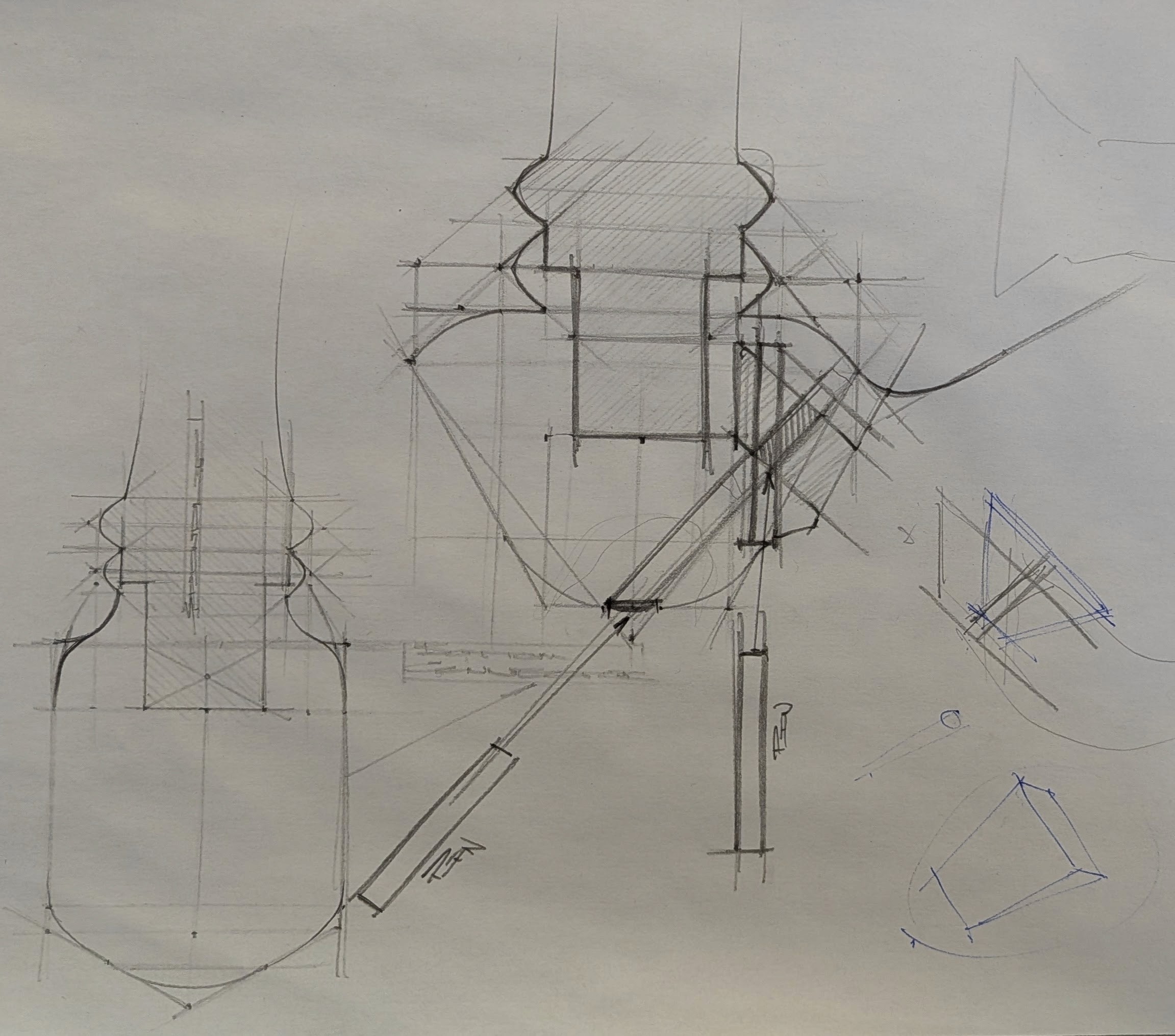
For the tabletop, I referenced the structure of era-specific game tables; public furniture, often used for chess/checkers. A general geometric silhouette came from those references, while its scalloped edge and filleted corners reinforce the table’s circular geometry.

Finally, I sprayed a wood-to-orange gradient across the spindle and legs, visually connecting the natural material to the printed components. The finished table combines CNC machining, lathe turning, 3D printing, and color into a cohesive interpretation of German design.

The final table delivers a culturally specific object without relying on literal symbols or applied decoration. Its five-part, tripod construction reads as a unified system: structured yet organic, restrained yet distinctly expressive. Small fabrication irregularities (including the darkened marks left by the cutting process) were retained as grain-like details, adding warmth to an otherwise precise form. The result is a functional, balanced piece that turns demanding material and manufacturing constraints into part of its character.
